
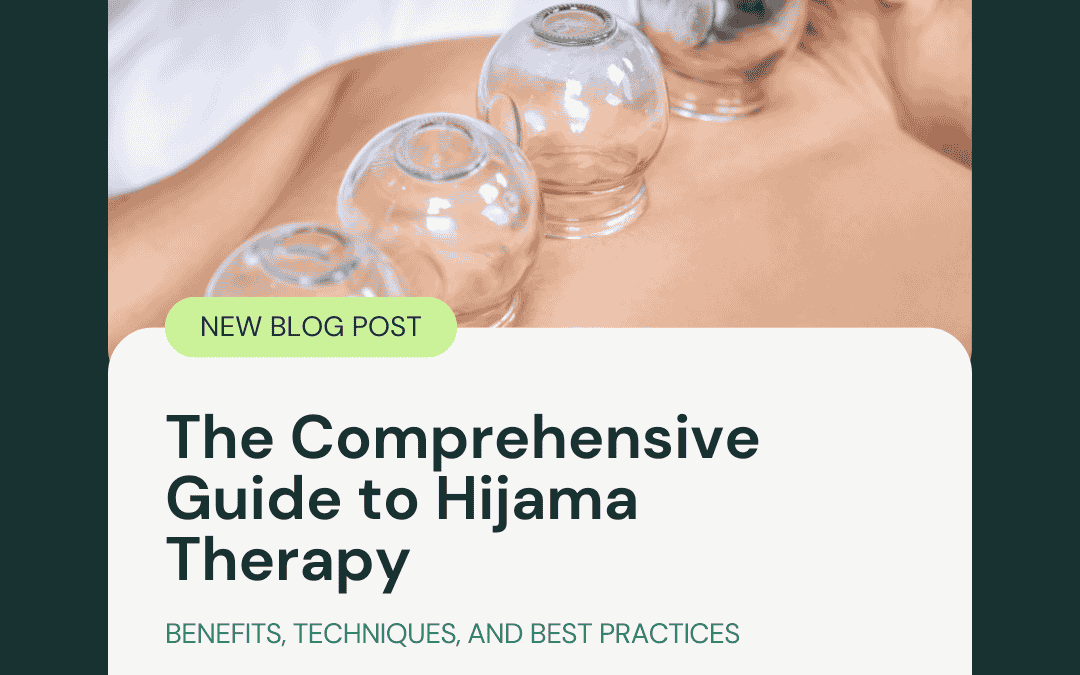
In Recent geezerhood, there’s been a growth interest in option and holistic health practices. Among these, Sunnah Hijama, a form of cure vegetable in Islamic custom, has gained revived tending not just for its spiritual meaning, but also for its potential wellness benefits in our Bodoni earth.
What Is Sunnah Hijama?
Hijama, derived from the Arabic word meaning”sucking,” is a centuries-old practise of wet therapy. It involves creating suck on the skin with cups and qualification moderate incisions to draw out a moderate add up of roue. This proficiency is believed to remove”stagnant” or”harmful” blood and restore natural poise in the body.
Sunnah Hijama refers to the particular practise of as performed and recommended by the Prophet Muhammad(peace be upon him). It is traditionally done on specific days of the Islamic lunar most notably the 17th, 19th, and 21st and on particular points of the body, such as the back of the neck and between the shoulders.
Historical and Religious Roots
Prophet Muhammad(PBUH) was reported to have said,”Indeed the best of remedies you have is cupping(Hijama)”(Sahih al-Bukhari). For Muslims, this command elevates the practise beyond mere health benefit it becomes a Sunnah, a prophetical tradition upstanding of observe and adoption.
Early Islamic scholars, physicians, and practitioners incorporated cupping near me into broader medical checkup knowledge. The famed Persian MD Ibn Sina(Avicenna) also recognised cupping as beneficial, discussing it in his prestigious medical texts.
How Is It Done?
A normal Sunnah Hijama seance involves several key stairs:
Preparation: The area to be treated is cleansed and the patient role’s chronicle reviewed.
Dry Cupping: Suction cups are applied to make a hoover on the skin, drawing blood toward the rise up.
Wet Cupping: Small, limited incisions are made with a sterile blade, and the cups are reapplied to extract rake.
Post-Care: The area is cleaned again, and natural ointments like olive oil or blacken seed oil may be practical.
The procedure is generally harmless when performed by trained professionals and usually lasts between 30 to 45 transactions.
The Science Behind It
While Hijama has deep roots in custom, modern explore is start to research its therapeutic personal effects. Some studies propose that may:
Improve blood circulation
Reduce inflammation
Relieve musculoskeletal pain
Support detoxification
Enhance unaffected function
However, more rigorous technological testify is needed to found definitive benefits, especially for degenerative conditions. Critics reason that the placebo effectuate may play a considerable role, but advocates maintain that homogeneous formal outcomes advise otherwise.
Hijama in Modern Practice
Today, Hijama is being experient across the Earth, from clinics in the Middle East to wellness centers in the West. Licensed practitioners often unite it with other holistic treatments such as stylostixis, chiropractic care, and massage therapy.
Importantly, many Muslims quest for Hijama not only for wellness but also as an act of spiritual cleaning and to prognosticative traditions. In this sense, the practice serves dual roles physical and Negro spiritual alterative.
Safety and Precautions
While in general safe, Hijama should only be performed by qualified professionals who observe stern hygiene protocols. It’s not suggested for:
Pregnant women
People with genus Anemia or certain rake disorders
Those on rakehell-thinning medications
Individuals with compromised unaffected systems
Always consult a checkup professional person before undergoing any form of choice therapy.
Conclusion
Sunnah Hijama is a bewitching intermix of ancient wisdom and Bodoni font wellness. As interest in cancel and revelatory medicate grows, so too does taste for time-honored practices that elevat both bodily wellness and spiritual well-being. Whether pursued for pain ministration, , or religious fulfilment, Hijama continues to do as a bridge over between tradition and skill in our ever-evolving healthcare landscape.